
Fund Management

Fund Management for Private Lending Funds

Make LendingWise the system of record for investor capital. Track who put money in, which loans that money went into, what interest it earned and what was paid back out. No spreadsheets, no separate back office.

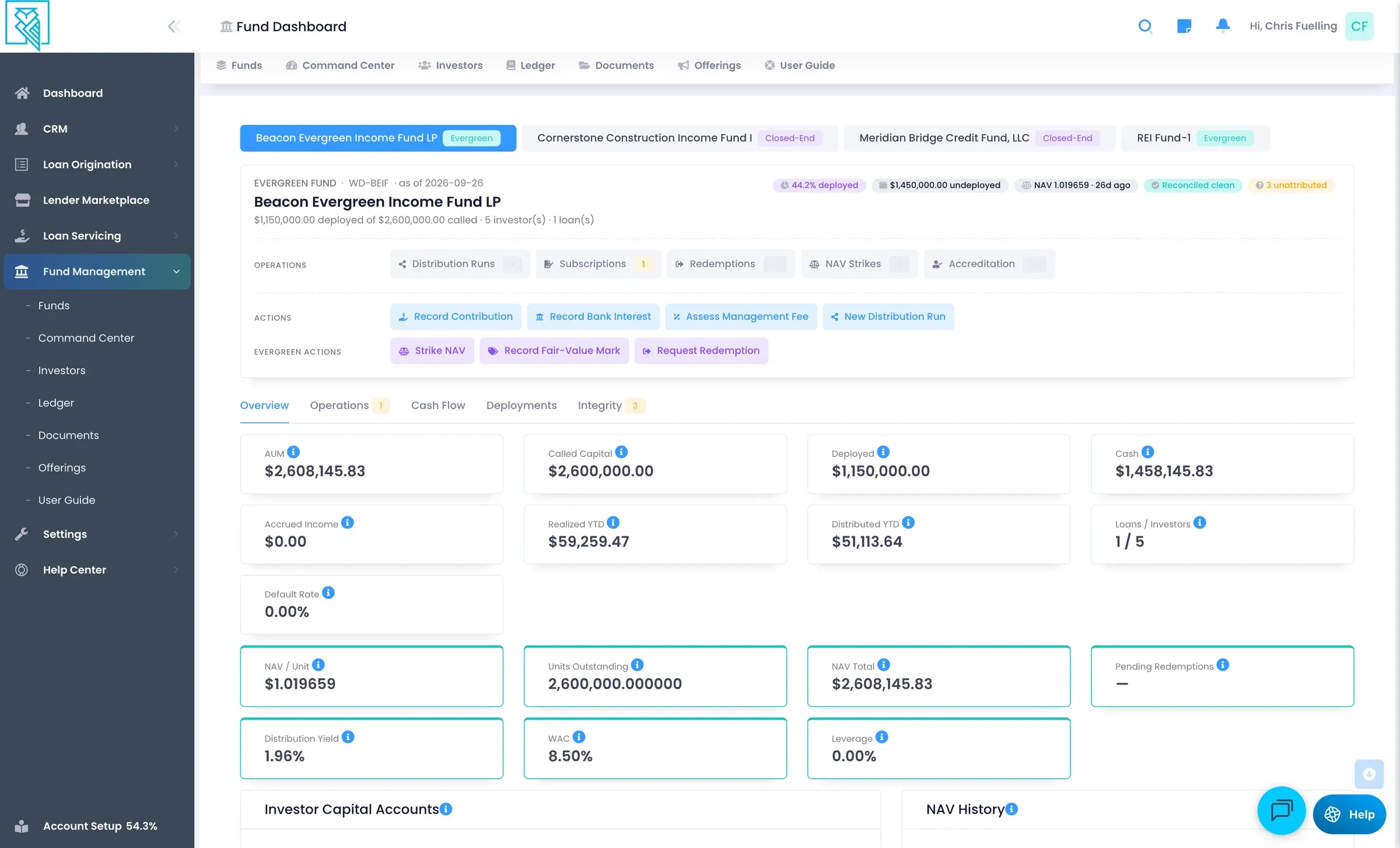
LendingWise fund dashboard with AUM, deployed capital, NAV and investor metrics
The Money Lifecycle

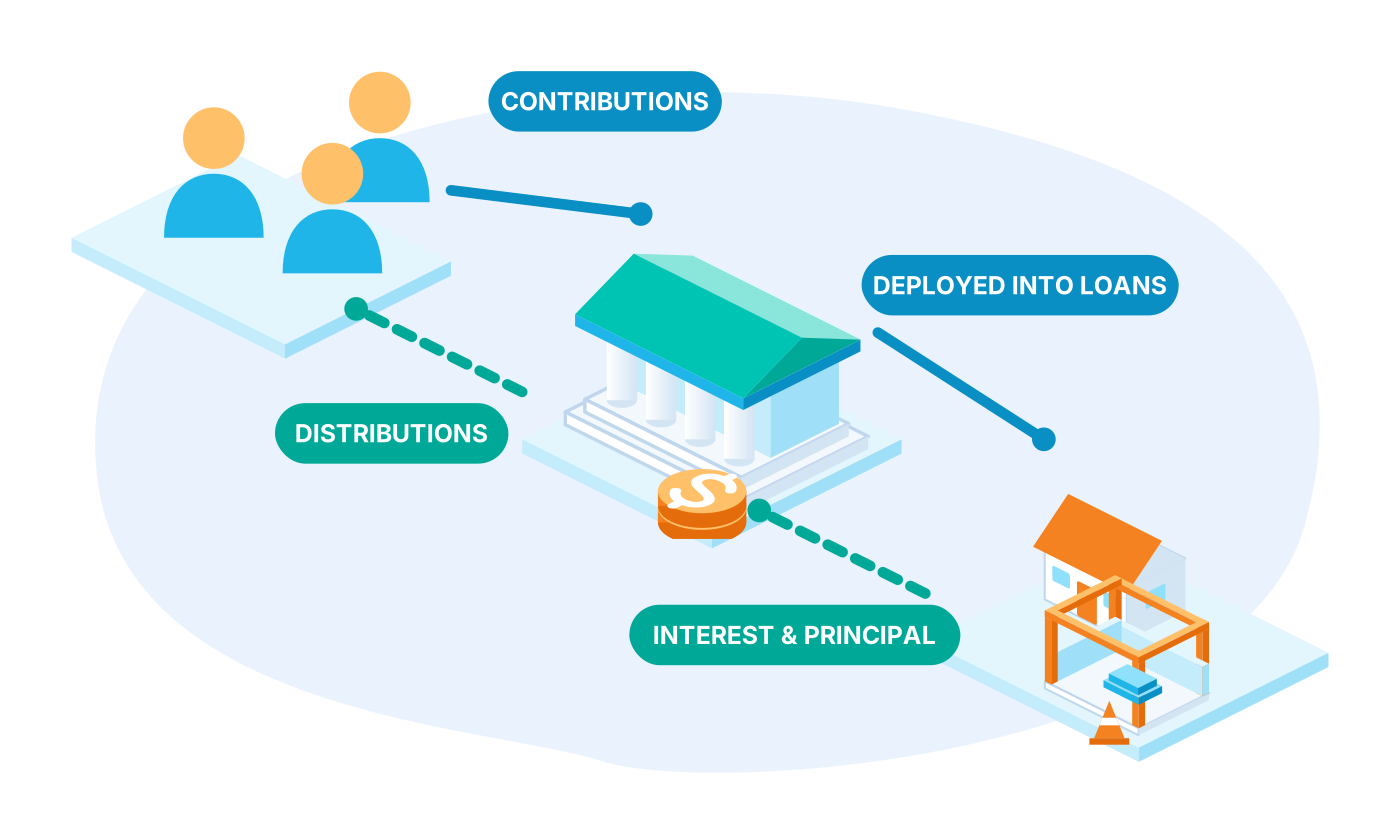
From Investor Dollars to Distributions

If you lend other people’s money, whether a pooled fund, a handful of direct investors, a credit line or your own balance sheet alongside them, every step is tracked in one place.

Illustration: investor contributions flow into a fund and are deployed into loans; interest and principal flow back to the fund and out to investors as distributions
  1. Investor money in
  2. Deployed into loans
  3. Borrowers pay interest
  4. Income accrues to investors
  5. Distributions out (or reinvested)
  6. Statements & dashboard
Fund Structure

Evergreen or Closed-End

The fund structure is the first choice you make, and it shapes how ownership is measured, what happens when loans pay off and how investors exit.

TopicEvergreen (open-end)Closed-End (vintage)
LifePerpetual: investors come and goFixed term, then wind-down
Ownership is measured inUnits priced at NAV per unitDollars (capital accounts)
Money comes in viaSubscriptions: cash buys units at the current NAV priceCommitments, then contributions (capital calls)
When a loan pays offPrincipal recycles into fund cash for the next loanPrincipal can be returned to investors (return-of-capital run)
Investors exit viaRedemption requests (notice period, lock-up, gate)Return-of-capital distributions as the fund winds down
Headline metricsNAV per unit, units outstanding, AUMDPI and TVPI (cash-on-cash multiples)

Built on a Ledger

Reconciles to the Cent

Everything runs on an immutable double-entry ledger, the same accounting discipline as our loan servicing. Every dollar movement is a permanent journal entry, and balances are always derived from those entries, never typed in.

  • Append-only corrections. A mistyped contribution is fixed with a reversal and a replacement, and both stay visible for your auditors.
  • Nightly integrity checks. Four reconciliation checks compare allocations, deployments, repayments and accrued income against servicing. Any drift is flagged.
  • Ownership from real money. Ownership percentage is never typed in; it’s derived from money actually received.
  • Sensitive data kept minimal. Investor tax IDs and bank numbers are stored as last-4 only.
Connected to Servicing

Capital That Follows Every Loan

Fund Management is built on top of our loan servicing. The servicing ledger records what happened on the loan, and the fund ledger mirrors the investor side of the same events.

Allocate Every Funded Loan

Split a loan’s funded principal across one or more capital sources, a fund, a direct investor, your balance sheet or an external credit line, with an optional per-source rate. A reconcile badge shows green when allocations equal funded principal to the cent.
Holdbacks Deploy With Draws

A rehab holdback counts toward the allocation but stays in fund cash until each construction draw disburses, and that’s when it deploys. The loan shows what’s committed but not yet deployed.

Income You Never Key In

Borrower interest is recognized daily and projected onto each capital source as accrued income, then converts to realized income when the borrower pays. Reversed payments back out automatically.

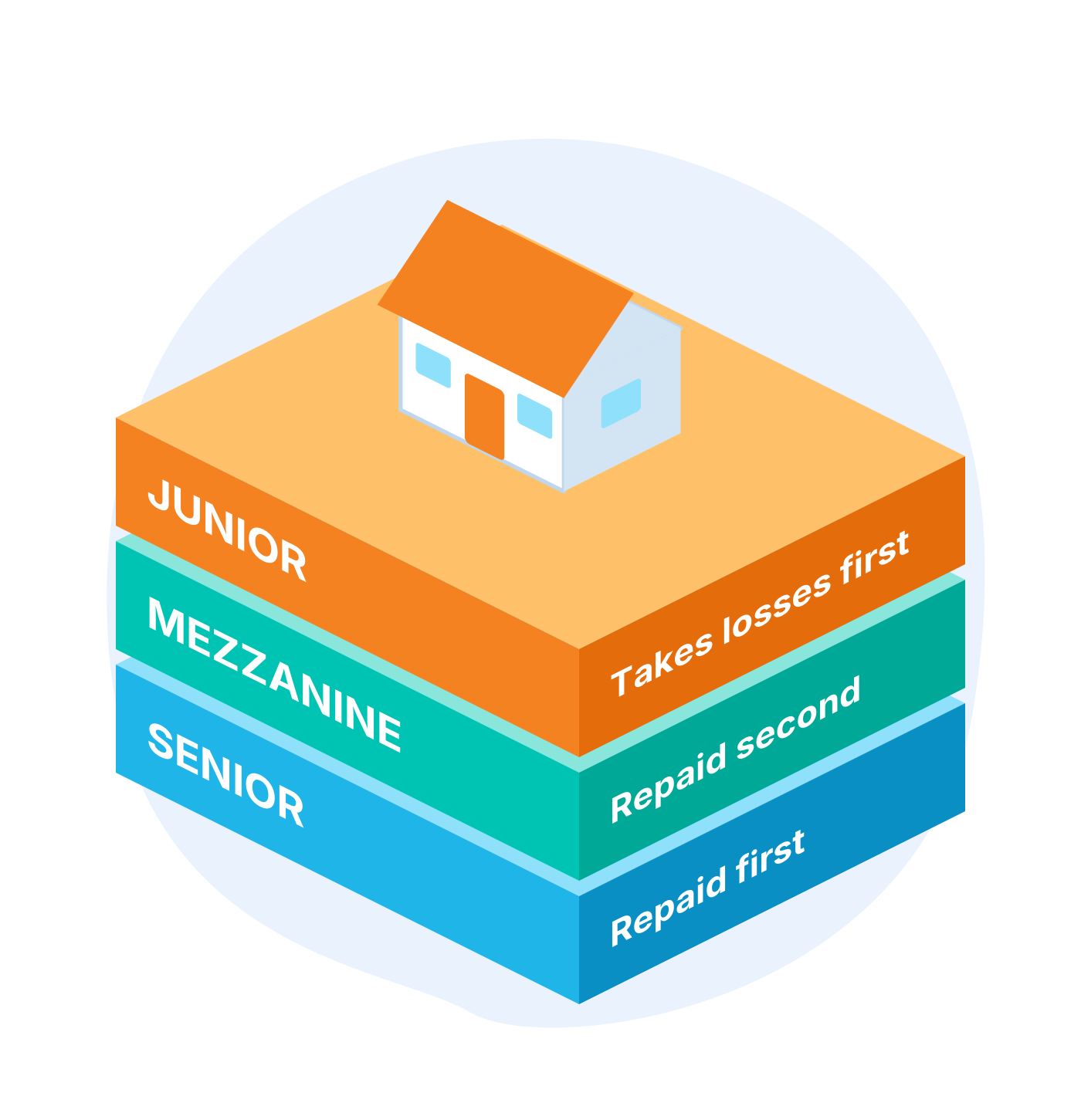
Illustration: a loan funded by a capital stack of senior, mezzanine and junior tranches; the junior tranche absorbs losses first and the senior tranche is repaid first

Capital-Stack Positions

  • Pari passuEqual footing: every source shares gains and losses by its percentage.
  • SeniorFirst in line to be repaid, last to take a loss.
  • MezzanineRepaid after the senior tranche, before the junior one.
  • JuniorThe most junior tranche absorbs losses first.
Fund Operations

Run the Fund From the Command Center

Contributions, bank interest, fees, distributions, NAV strikes, redemptions, subscriptions and accreditation review all sit on the fund you have selected.

  • Distribution Runs

    Create a draft, review each investor’s share (computed for you, never typed) and post. Income runs can never pay out more than realized, undistributed income.
  • DRIP, Return of Capital & Waterfalls

    Reinvest evergreen income into new units, return principal on closed-end funds as loans pay off, or pay a preferred return first and split the rest with GP carry.
  • NAV Strikes

    Evergreen funds strike NAV on their own cadence or on demand, at cost or at fair value with per-loan marks. Subscriptions and redemptions price at the latest strike.
  • Redemption Queue

    Requests wait out the notice period and any lock-up, then fill in queue order up to the fund’s gate. The excess rolls to the next strike automatically.
  • Management Fees

    Set the rate and basis (committed, called, AUM or deployed) and assess a pro-rated fee for each period. Re-assessing the same period does nothing.
  • Rank-Aware Write-Downs

    A loan-level loss cascades down the capital stack, junior tranche first. Recoveries reverse the order, so the senior tranche is made whole first.

Every Fund at a Glance

Switch between funds from one Command Center: status pills across the top, an action rail that hides actions your fund type can’t use, and Overview, Operations, Cash Flow, Deployments and Integrity views.

  • AUM
  • Called Capital
  • Deployed
  • Cash
  • Accrued Income
  • Realized YTD
  • Distributed YTD
  • Loans / Investors
  • Default Rate
  • NAV / Unit
  • Units Outstanding
  • Distribution Yield
  • WAC
  • Leverage
LendingWise Fund Management Command Center with fund operations, actions and overview metrics
Investors

An Investor Portal & Offerings Built In

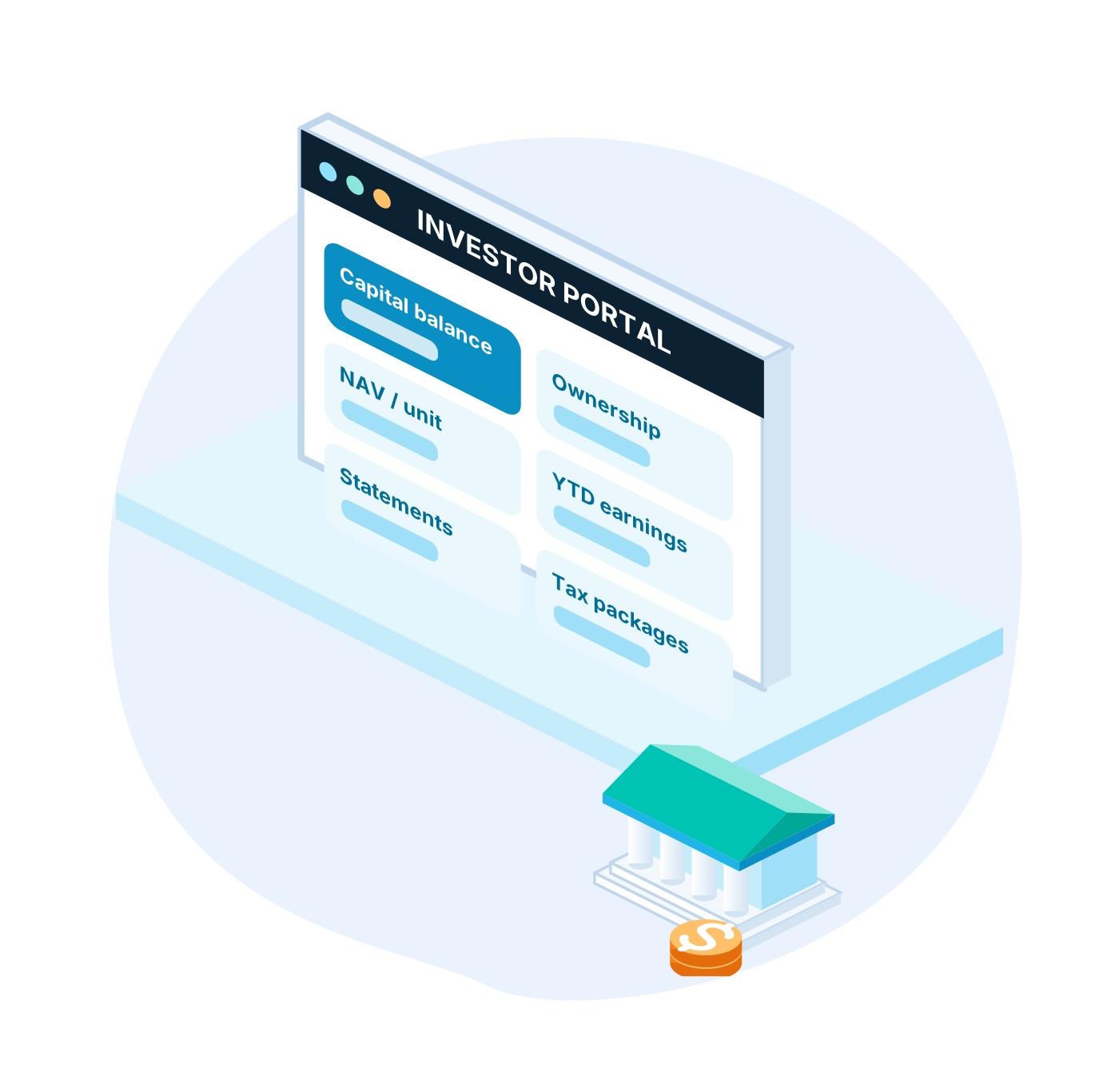
Illustration: an investor portal window with tiles for capital balance, ownership, NAV per unit, YTD earnings, statements and tax packages

Investor Portal

Invite-only, read-only self-service. Investors see only their own positions: capital balance, ownership, units & NAV or committed & called with DPI/TVPI, YTD earnings, transactions and statements (HTML, CSV, PDF). Shared documents and annual tax packages (a K-1 or 1099-INT informational summary built from the ledger) are in their Documents tab.

Offerings & Capital Raising

Give each fund a public offering page, a full public teaser (506(c)) or a generic landing page (506(b)), with deeper tabs gated until an investor signs in. Investors complete accreditation in the portal, then subscribe or set a commitment for you to approve and fund.

Sign up now & get started in minutes!

Let us show you how our end-to-end system can transform your lending operations:

Book Demo